
FIRST SRI LANKA TRIP
Culture, highlands and coast.
A balanced first journey can connect major heritage sites, cooler hill country and a few slower days beside the sea.
Explore area by area
The island is compact, but every region has its own pace. Compare six practical starting points and build a route that makes sense on the ground.
Six regions, one connected journey
Start with the coast, culture or highlands that matter most to you, then connect two or three regions with realistic travel time.
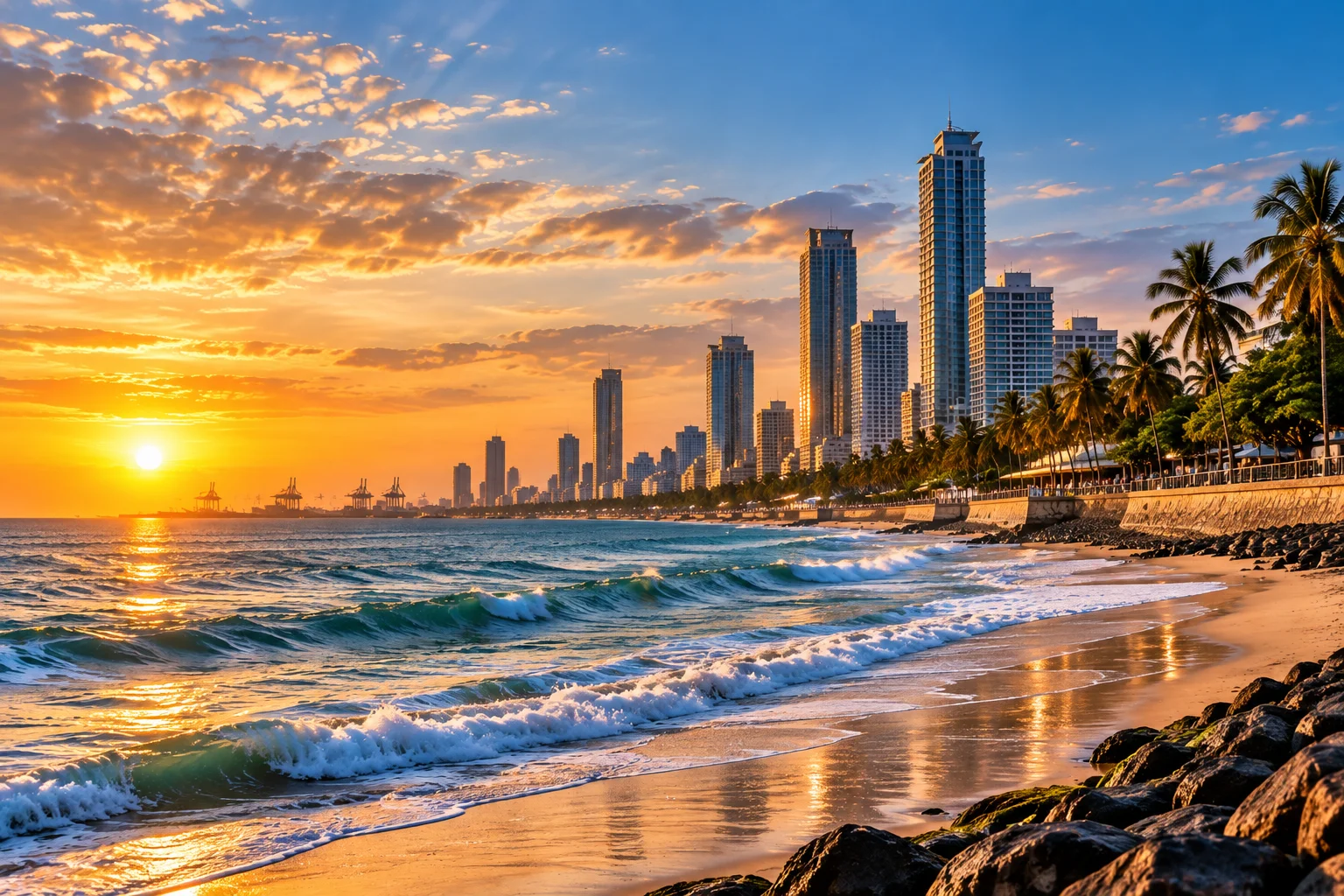
Begin with creative city energy, oceanfront evenings and easy coastal stops north and south of the capital.

Ancient capitals, cave temples and dramatic rock landscapes make this the island's essential heritage circuit.
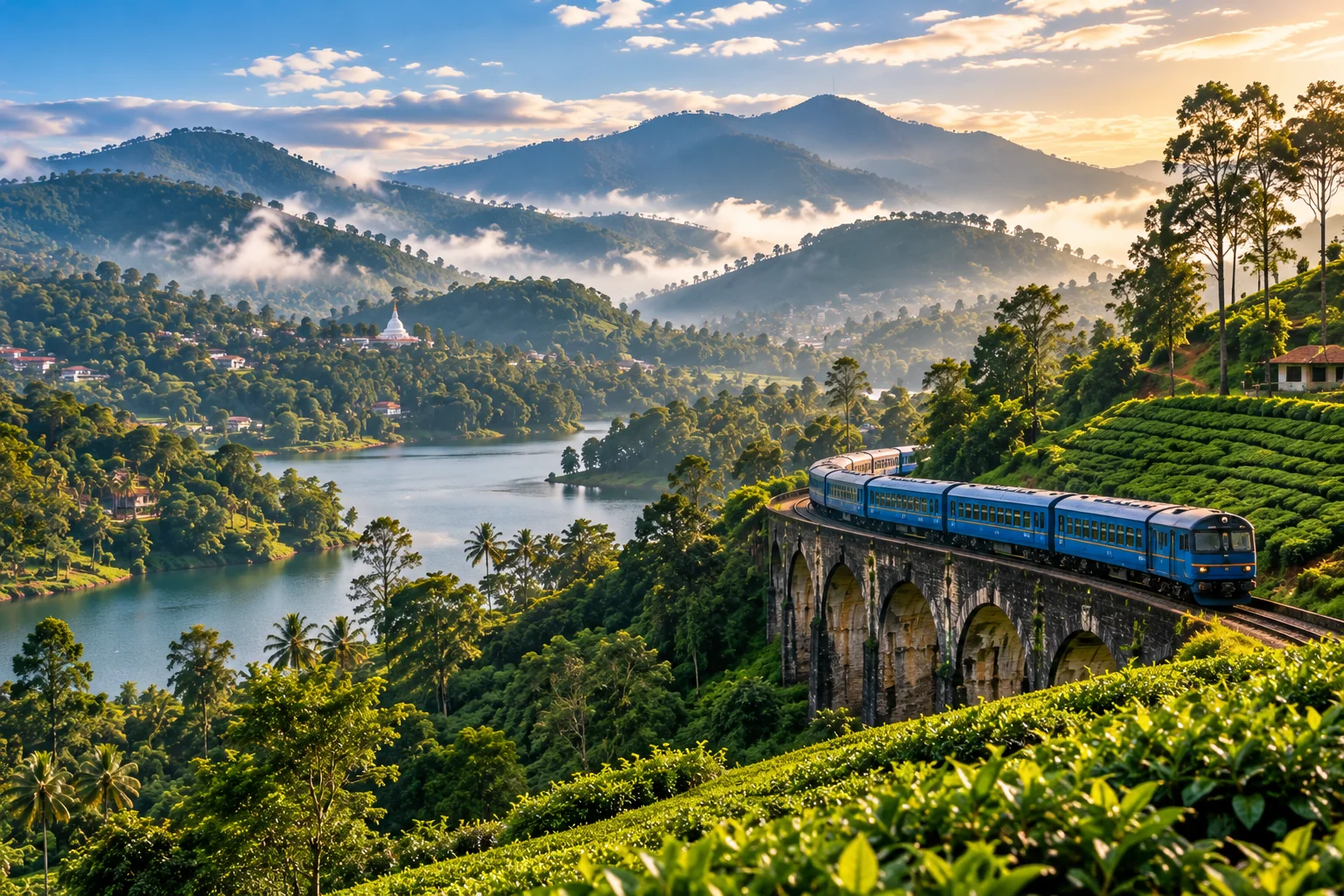
Cooler air, tea estates, forest walks and one of Asia's most memorable rail journeys shape the central highlands.
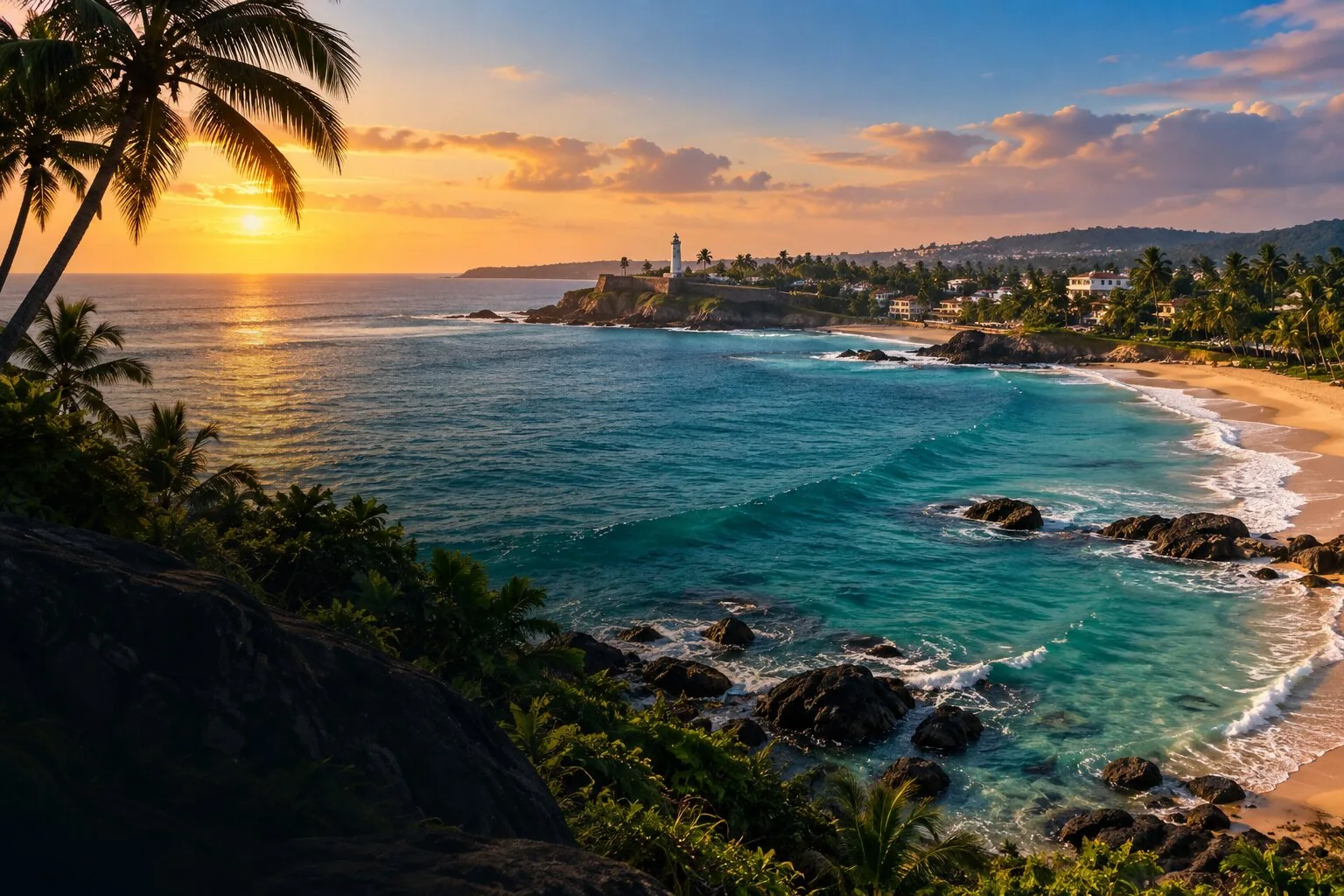
Historic Galle, surf towns, small coves and nearby wildlife create an easy coastal chapter with plenty of variety.

Long bright beaches and warm water make the east a valuable seasonal counterpoint to Sri Lanka's southwest coast.
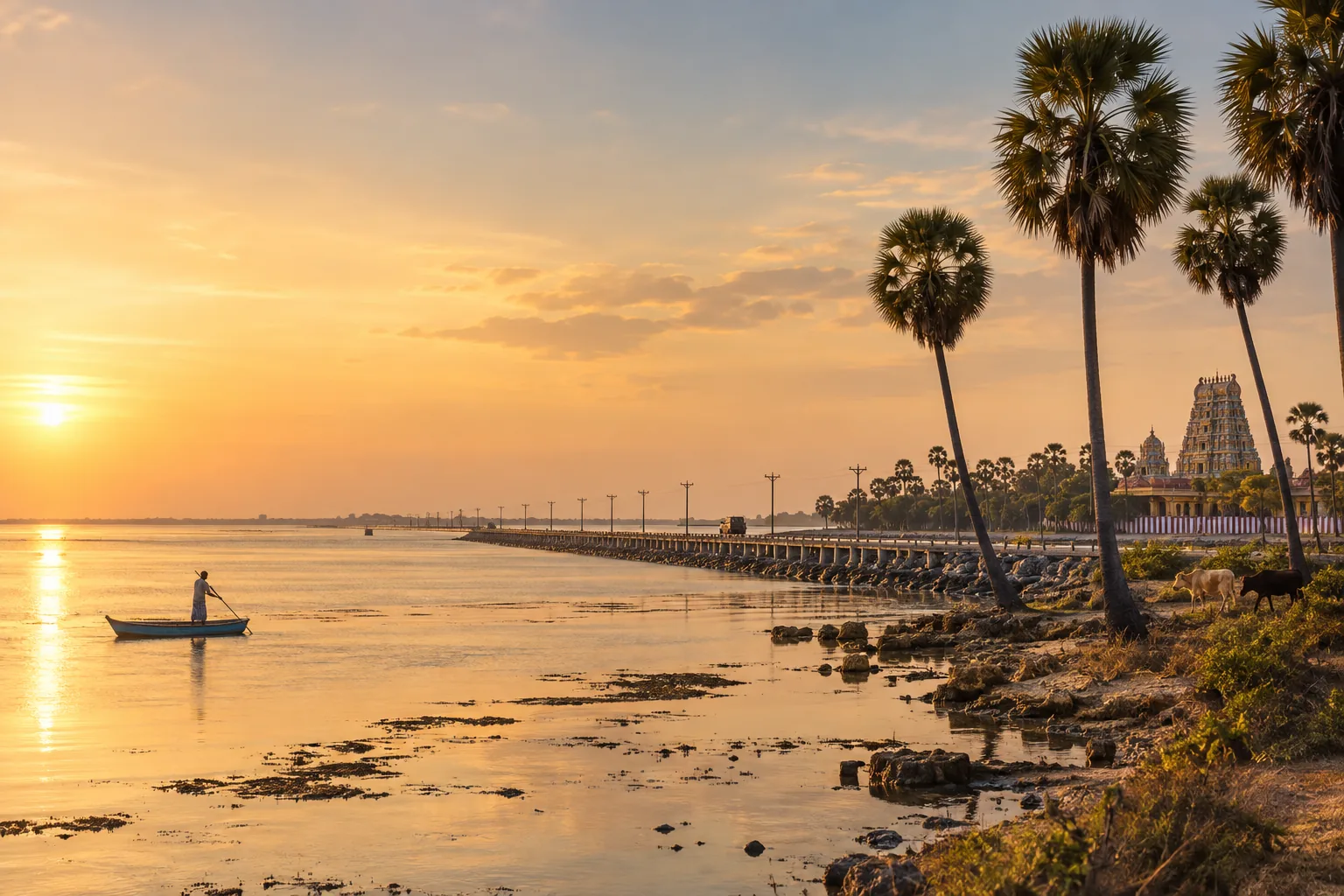
Distinct food, landscapes and Tamil cultural heritage reward travellers who give the peninsula time and curiosity.
COMPARE THE REGIONS
Compare the six main regions by travel style, useful season and suggested time. Use this as a starting point, then open the full regional guide before building your route.
Food · City · Coast
November–March
2–3 days
→Heritage · Temples
Year-round
3–4 days
→Rail · Tea · Walking
January–April
4–6 days
→Beaches · Surf
November–March
4–7 days
→Warm seas · Surf
May–September
4–7 days
→Culture · Food · Islands
May–September
3–5 days
→You do not need all six regions. A better first trip usually combines fewer regions with enough time to experience each one properly.
Compare the seasons →CHOOSE BY TRIP STYLE
You do not need to know Sri Lanka’s geography before planning. Start with the experience that matters most, then use the regional guides to build the route around it.
FIRST SRI LANKA TRIP
A balanced first journey can connect major heritage sites, cooler hill country and a few slower days beside the sea.
BEACHES & SURF
The South and East coasts work at different times of year. Pick the right side of the island before adding extra stops.
CULTURE & HISTORY
Ancient capitals, temples, living religious traditions and northern culture can create a journey with more historical depth.
FOOD & CITY LIFE
Colombo gives you the widest urban mix, while Jaffna adds a distinctly northern food culture and a very different city rhythm.
SCENIC & SLOW
Hill-country rail journeys, tea landscapes and slower coastal stays work best when you leave room between major travel days.
QUIETER & MORE REMOTE
The north and east reward travellers who are comfortable with longer journeys, slower days and fewer tightly scheduled stops.
FOLLOW THE SEASONS
You do not need perfect weather everywhere. Choose the region that suits your travel month, then build the rest of the route around it.
SOUTH & WEST
Colombo, the West Coast and South Coast are especially useful during this period for beach-focused routes and coastal travel.
EAST COAST
The East Coast becomes a strong alternative when the southwest experiences its wetter monsoon period.
HILL COUNTRY
Kandy, tea country and the central highlands can work especially well during the earlier part of the year.
NORTH
Jaffna and the northern peninsula are useful during the middle of the year, although heat and ferry conditions still matter.
Weather patterns overlap, vary by region and do not follow exact calendar boundaries. Use these windows as route guidance rather than a guarantee for individual travel days.
A useful planning rule
Distances look short on a map, but roads, rail schedules and mountain terrain can make journeys part of the day.
STARTER ROUTES
These are starting structures, not fixed itineraries. Choose the route that matches your time and interests, then adjust the number of nights inside each regional guide.
CLASSIC FIRST JOURNEY
A balanced first route combining major heritage sites, cooler hill-country landscapes and a slower finish beside the sea.
Best for: First visits · Culture · Scenery · Beach time
SHORTER COASTAL ROUTE
Keep the journey simple with city time, food and an easy transition into Sri Lanka’s southern coastal route.
Best for: Short trips · Food · Coast
MID-YEAR ROUTE
Combine inland heritage with a slower east-coast stay when the eastern side of the island suits your travel season.
Best for: Heritage · Beach · May–September travel
NORTHERN JOURNEY
Build a more focused cultural journey through the ancient heart of the island before continuing north to Jaffna, the peninsula and, with enough time, an island day.
Best for: Culture · History · Slower independent travel
Add nights before adding regions. A route with three well-paced regions will usually feel better than trying to touch five places in the same number of days.
HOW REGIONS FIT TOGETHER
Sri Lanka is compact, but the roads are slow and each region has its own pace. Choosing two or three areas well always beats racing between six.
Distances on a map bear little relation to travel time. A route that looks like two hours can take four, and a short-looking cross-island hop can consume most of a day. This is the single most common reason first-time itineraries feel rushed. When you compare regions, compare the journeys between them at least as carefully as the destinations themselves.
Sri Lanka does not have one national weather pattern. The south-west and the east coast are at their best at different times of year, and the hill country has its own conditions entirely. That means the right region to visit depends on your month as much as your interests, and a region that is perfect in July may be the wrong choice in January.
The same three regions in a different order produce a very different trip. Working gradually toward your departure point usually reduces the length of the final transfer, and grouping regions that sit close together removes unnecessary backtracking. Build the order around the journeys, then check whether the sequence still gives each area enough nights.
A single night in a region usually means an evening arrival and a rushed morning. Two nights is where a place starts to feel like somewhere you have been rather than a checkpoint, and three nights is where you begin to find things that were not on any list. If your itinerary has several one-night stops, it has too many regions.
Realistic expectations
Every region on this site is worth visiting, but none of them is effortless. Understanding what each one demands in terms of travel time, heat, altitude or pace is more useful than a list of highlights.
The Cultural Triangle involves large, exposed sites and considerable walking in heat. The hill country involves slow, winding roads, cooler and wetter weather, and journeys that take longer than they look. The coasts involve real decisions about season and sea conditions, and the more isolated stretches require accepting that everything is a transfer away.
The useful question is not which region is best, but which combination fits your month, your pace and the number of nights you actually have. A well-matched two-region trip consistently outperforms a poorly matched five-region one.
BUILDING A ROUTE
Route order determines how much of your trip is spent moving. These patterns reduce backtracking and shorten final transfers.
The first night should not involve a long onward journey. Bandaranaike Airport sits north of Colombo, and a late arrival followed by a two-hour drive to a guesthouse is a poor way to start any trip, however tempting the itinerary looks on paper. Spend the first night near the airport or in a city hotel, travel on in the morning, and begin the real route rested.
Ending your trip roughly where you started removes the long final transfer that catches so many itineraries off guard. A route that moves from the Cultural Triangle through the hills and finishes on the south-west coast flows naturally toward Colombo, whereas finishing in the far north or east means a long return journey on the day your margin matters most.
Pairing areas that are genuinely close to each other removes days spent in transit between distant points. The Cultural Triangle and Kandy connect well, Kandy and the hill country are effectively continuous, and the southern parks sit on the way to the southern beaches. Grouping these reduces the number of long travel days without cutting any content.
Every itinerary should have room for something to go wrong, because something will. A day with no fixed booking absorbs a delayed train, a closed site or a change of heart about staying somewhere longer. That slack is worth more to most travellers than one more destination, and it is the first thing to add when you have spare nights.
Turn ideas into a route