

01
DECEMBER — MARCH
South & West Coast
A strong period for combining southern beaches, the west coast and Sri Lanka's classic first-time travel route.
GalleMirissaUnawatunaBentota
PLAN AROUND THE SEASONS
Sri Lanka doesn't have one single perfect travel season. Different parts of the island are at their best at different times of year.
Find your best month →A rainy season in one part of Sri Lanka can mean better conditions somewhere else on the island.
SOUTH & WEST
EAST COAST
HILL COUNTRY
PLAN BY MONTH
Choose your travel month and Tripbook will show which parts of Sri Lanka are generally better suited to that time of year.
NORTHEAST MONSOON PERIOD
January is generally a strong month for the south and west coasts, while the east and northeast can still experience wetter conditions.
GOOD REGIONS TO CONSIDER
BEACHES
The south and west coasts generally have better beach conditions during this period.
HILL COUNTRY
January can be a pleasant time for Kandy, Nuwara Eliya and other central highland areas.
TRIPBOOK TAKE
Combine the south coast with the Cultural Triangle and Hill Country for a balanced first visit.
UNDERSTAND THE WEATHER
Sri Lanka's weather doesn't change everywhere at once. The two main monsoons affect different parts of the island, which is why choosing the right region matters as much as choosing the right month.
SOUTHWEST MONSOON
Wetter conditions generally affect the southwest and western slopes, while the east and north can offer better seasonal alternatives.
Wetter sideSouth & West
ConsiderEast & North
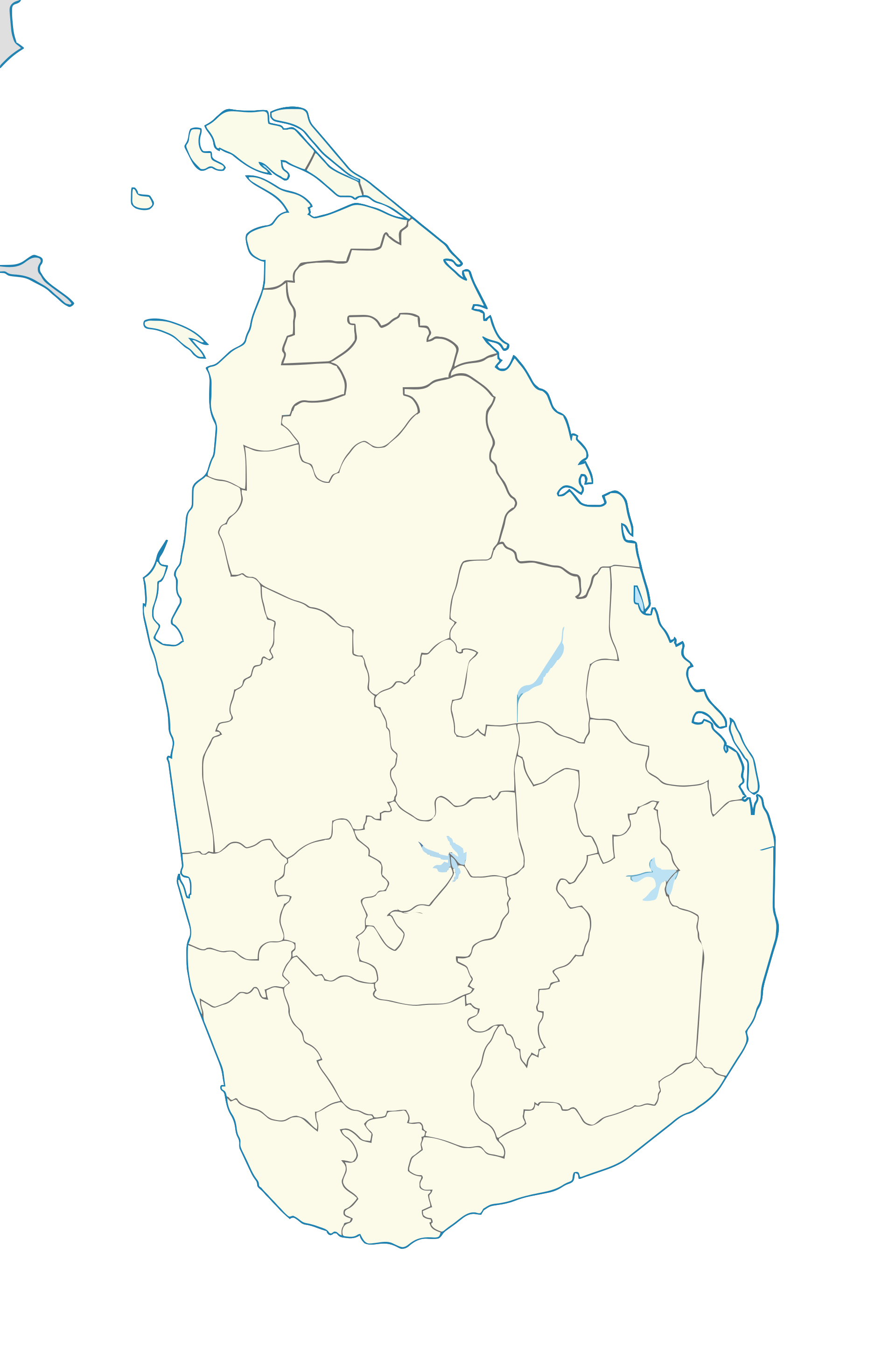
Seasonal pattern — simplified for trip planning
NORTHEAST MONSOON
The northeast and eastern side receive more seasonal rainfall, while the south and west generally become stronger choices for beach-focused trips.
Wetter sideEast & Northeast
ConsiderSouth & West
BETWEEN THE MONSOONS
During inter-monsoon periods, thunderstorms and changing conditions can occur across several parts of the island. Check local forecasts and keep some flexibility in your route.
WHERE TO GO WHEN
Different parts of Sri Lanka come into their own at different times of year. Start with the coast that suits your travel month, then build the rest of your route around it.
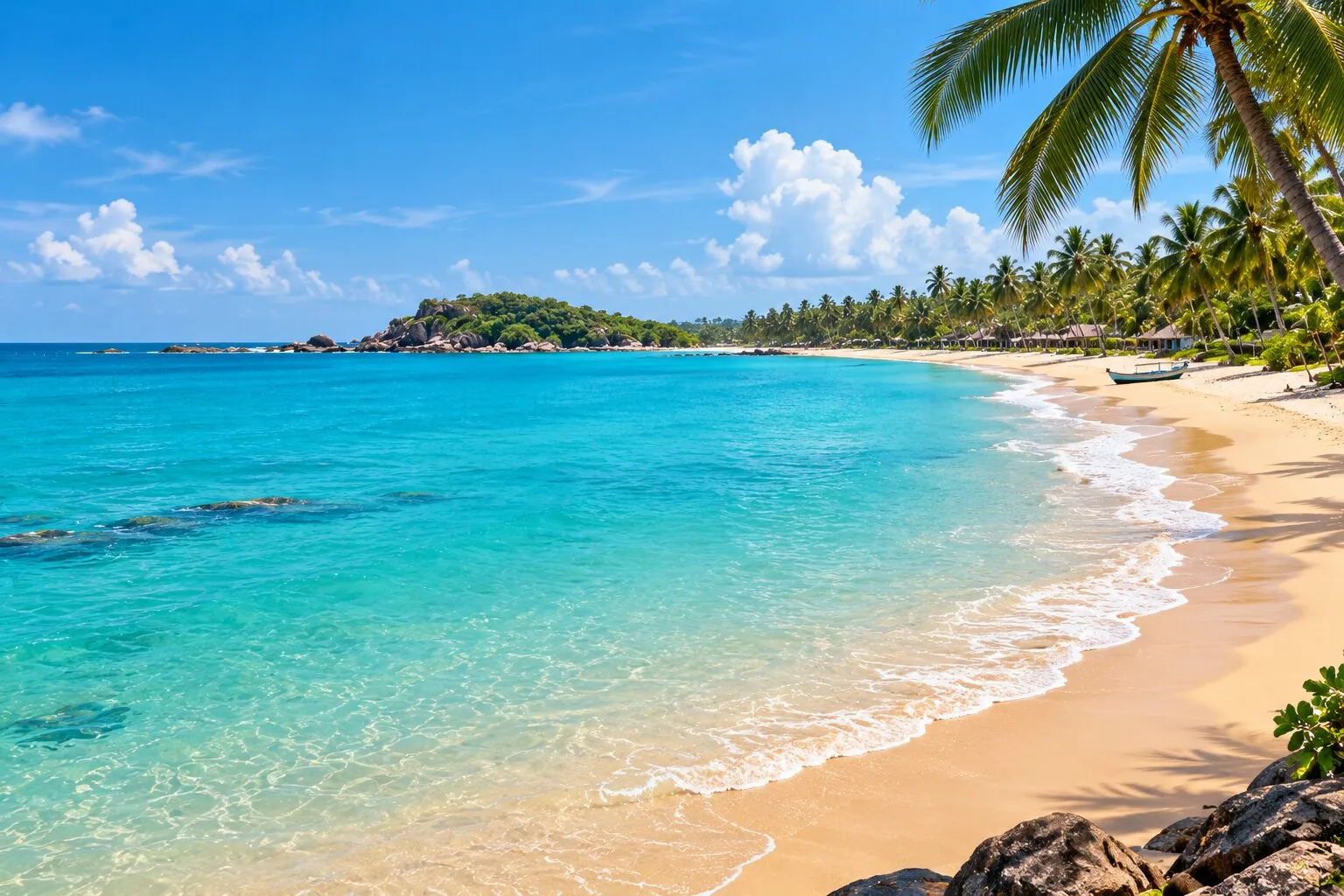
DECEMBER — MARCH
A strong period for combining southern beaches, the west coast and Sri Lanka's classic first-time travel route.
MAY — SEPTEMBER
When the southwest monsoon is active, the east becomes one of the strongest coastal alternatives.
Kandy, Nuwara Eliya and Ella can be visited throughout the year, but January through April often offers a useful combination of cooler conditions and relatively drier weather.
DON'T OVER-PLAN THE WEATHER
Seasonal patterns are useful for planning, but they are not guarantees. Short showers can happen during otherwise good travel periods, while sunny days can appear during wetter months.
Check your month ↑THE YEAR AT A GLANCE
Use this quick guide when your travel dates are flexible. It shows which parts of Sri Lanka are generally stronger choices through the year.
South & west beaches, Hill Country and Cultural Triangle.
A useful month for combining beaches, culture and highlands.
South, west and central areas remain useful travel choices.
First inter-monsoon. Expect heat and possible afternoon showers.
Southwest monsoon begins while eastern options become stronger.
Consider Trincomalee, Pasikuda and the north alongside culture.
A strong period for eastern beaches and Cultural Triangle routes.
East-coast travel combines well with inland cultural destinations.
The east can remain useful as the island approaches transition.
Second inter-monsoon can bring thunderstorms across many areas.
Conditions transition as the south and west begin improving.
South, west and central Sri Lanka become strong route choices.
DEC — FEBNortheast monsoon
MAR — APRFirst inter-monsoon
MAY — SEPSouthwest monsoon
OCT — NOVSecond inter-monsoon
PLAN AROUND YOUR INTERESTS
The best month depends on what you want to experience. Use these seasonal patterns as a starting point, then check local conditions closer to your trip.
Swipe to compare all 12 months →
Choose the coast by season.
Best timing depends on the park and species.
Cooler highland journeys.
Easy to combine with most routes.
Follow the seasonal swell.
This is a simplified planning guide rather than a guarantee of daily weather or wildlife sightings.
WEATHER IN THE REAL WORLD
Sri Lanka's seasonal patterns are useful for choosing when and where to travel, but they don't predict the weather on a particular day.
Tropical showers can be brief or localized. A forecast showing rain does not necessarily mean continuous rain throughout your trip.
Places such as Ella and Nuwara Eliya are cooler than the lowlands, and conditions can vary considerably through the day.
Use seasonal guidance to build your route, then check current forecasts and official weather information before travelling.
BEFORE YOU HEAD OUT
For current forecasts, warnings and weather observations, use the Sri Lanka Department of Meteorology.
Tripbook's seasonal guidance describes general travel patterns. It should not be treated as a daily weather forecast or severe-weather warning.
COMMON QUESTIONS
There isn't one perfect month for the whole island. The best time depends on where you want to go and what you want to do.
December to March is a popular period for classic first-time routes combining the south and west coasts with the Cultural Triangle and Hill Country. But Sri Lanka can be visited throughout the year by choosing the right region for the season.
Not necessarily. Rainfall varies by region, elevation and individual weather system. Some days may have short showers, while stronger monsoon periods can bring longer spells of rain. Seasonal patterns should be used for planning rather than as a daily forecast.
November through March generally brings better beach conditions to the south and west, with calmer seas and more favourable conditions for coastal travel.
The east coast becomes particularly useful during the southwest monsoon period. From roughly May through September, destinations such as Trincomalee, Pasikuda and Arugam Bay can be strong alternatives to the wetter southwest.
The central highlands can be visited throughout the year. January through April is a useful planning period for cooler highland journeys, but places such as Ella and Nuwara Eliya can experience changing conditions at any time.
No. October and November form the second inter-monsoon period, when thunderstorms and heavier showers can affect many parts of the island. Travel is still possible, but a flexible route and up-to-date weather checks become more important.
OFFICIAL INFORMATION
Tripbook uses official climate and tourism information to help explain general seasonal patterns. For current conditions, forecasts and warnings, always check the relevant official source.